


In a world where the pursuit of physical excellence often feels like a relentless race, the focus on strength training has evolved into a sophisticated science. Gone are the days when lifting heavy weights was merely seen as a brute path to bulging muscles; today, it is recognized as a complex interplay of biomechanics, neurology, and physiology. As athletes and fitness enthusiasts alike endeavor to unlock their true potential, understanding the mechanisms behind maximal strength training becomes paramount. This article delves into the intricate world of strength development, exploring the scientific principles that underpin maximal training, the methodologies employed, and the tangible benefits that extend far beyond the gym. Join us on a journey through the trenches of research and practice, as we unravel the secrets of building strength and harnessing the power within.
Table of Contents
- Exploring the Fundamentals of Maximal Strength: Mechanisms and Benefits
- The Role of Muscle Fiber Types in Strength Development
- Designing an Effective Maximal Strength Training Program
- Nutrition and Recovery: Fueling Your Path to Strength Mastery
- The Way Forward
Exploring the Fundamentals of Maximal Strength: Mechanisms and Benefits
Maximal strength training revolves around the capacity to exert force against resistance at its highest level. This type of training activates specific physiological adaptations, primarily enhancing the efficiency of neuromuscular connections. As your central nervous system adapts, its ability to recruit motor units increases, allowing for greater force production with each contraction. When participating in a well-structured maximal strength regimen, the body undergoes significant cellular changes, including hypertrophy of muscle fibers and increased density of myofibrils. The result is not just a boost in strength, but also improved overall physical function.
The benefits of maximal strength extend beyond mere aesthetics, greatly influencing other facets of physical performance and health. Engaging in such training can lead to:
- Enhanced Athletic Performance: Improved strength translates to better power output in activities ranging from sprinting to weightlifting.
- Injury Prevention: Strengthening muscles, tendons, and ligaments can mitigate the risk of injuries.
- Increased Metabolic Rate: Muscle mass gained through strength training raises resting metabolic expenditure.
- Better Posture and Core Stability: A stronger core leads to improved alignment and reduced lower back pain.
Additionally, the psychological benefits include boosted confidence and enhanced mental resilience, contributing holistically to well-being.
The Role of Muscle Fiber Types in Strength Development
The intricate tapestry of muscle fiber types plays a pivotal role in strength development, with each type contributing uniquely to our ability to generate force. Muscle fibers are broadly categorized into Type I (slow-twitch) and Type II (fast-twitch) fibers, each serving distinct purposes during physical activity. Type I fibers, known for their endurance capabilities, are primarily recruited during prolonged, lower-intensity exercises. They rely on aerobic metabolism, making them essential for activities such as long-distance running and cycling. Conversely, Type II fibers are divided into Type IIa and Type IIb categories, which thrive in high-intensity, explosive movements. Type IIa fibers, while capable of using both aerobic and anaerobic pathways, offer a blend of endurance and strength, whereas Type IIb fibers focus solely on maximal force production, showcasing the body’s astonishing ability to harness energy during brief bursts of effort.
Understanding the proportion of these muscle fiber types in our individual bodies can offer profound insights into optimizing strength training regimens. Athletes or individuals seeking to enhance their strength can tailor their training programs based on their predominant fiber types. For instance, someone with a higher percentage of fast-twitch fibers may benefit from heavy lifting and explosive movements, while those with a greater concentration of slow-twitch fibers might find success in moderate-weight lifting with higher repetitions. The table below illustrates optimal training modalities based on predominant muscle fiber types:
| Muscle Fiber Type | Key Characteristics | Recommended Training Style |
|---|---|---|
| Type I | High endurance, low force | Longer duration, lower intensity |
| Type IIa | Moderate endurance, moderate force | Mixed training, moderate weights |
| Type IIb | Low endurance, high force | Heavy lifting, low reps |
Designing an Effective Maximal Strength Training Program
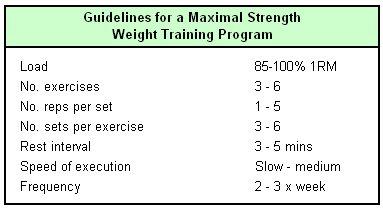
To create a program that truly enhances maximal strength, it is crucial to focus on both the principles of progressive overload and exercise selection. A structured plan should incorporate a variety of compound movements that engage multiple muscle groups, leveraging exercises such as squats, deadlifts, and bench presses. These foundational lifts should be emphasized alongside accessory work, aiming for a balance that promotes comprehensive strength development. Additionally, periodization plays a vital role; incorporating phases of volume, intensity, and recovery can prevent plateaus and ensure continued progress by systematically varying training stimuli.
Moreover, the implementation of specificity in training is essential to progress effectively. Individual goals should dictate parameters such as rep ranges and rest intervals. Typically, for maximal strength, lower rep ranges (1-6 reps) with longer rest periods (2-5 minutes) yield the best results. Tracking performance metrics and adjusting training loads accordingly can further optimize the program. Below is a concise table showcasing a sample training split designed for maximal strength:
| Day | Focus | Example Exercises |
|---|---|---|
| Monday | Lower Body | Squats, Deadlifts |
| Wednesday | Upper Body | Bench Press, Rows |
| Friday | Power & Accessory | Olympic Lifts, Pull-ups |
Nutrition and Recovery: Fueling Your Path to Strength Mastery
To maximize your strength training efforts, understanding the intricate relationship between nutrition and recovery is essential. Consuming the right nutrients not only fuels your workouts but also promotes effective recovery, allowing for continual growth and adaptation. Key elements of a strength-focused nutrition plan include:
- Protein: Vital for muscle repair and growth; aim for a variety of sources like lean meats, dairy, legumes, and plant-based proteins.
- Carbohydrates: Your body’s primary energy source during high-intensity lifting; prioritize complex carbs like whole grains, fruits, and vegetables.
- Healthy Fats: Important for hormonal balance and joint health; incorporate sources like avocados, nuts, seeds, and olive oil.
Recovery strategies complement your nutritional intake, ensuring that your body can perform at its peak. Prioritize elements that support muscle repair and replenish energy stores, such as:
- Hydration: Adequate water intake is crucial for optimal muscle function and recovery; aim for at least half your body weight in ounces daily.
- Sleep: Quality rest supports hormone regulation and muscle recovery; strive for 7-9 hours per night.
- Active Recovery: Low-intensity activities like walking or yoga can enhance blood flow and reduce muscle soreness.
| Recovery Component | Recommended Practices |
|---|---|
| Nutrition Timing | Consume protein and carbs within 30 minutes post-workout. |
| Stretching | Incorporate dynamic stretching pre-workout and static stretching post-workout. |
| Foam Rolling | Use foam rollers to alleviate muscle tightness and improve blood flow. |
The Way Forward
As we reach the conclusion of our exploration into the fascinating world of maximal strength training, it’s clear that unlocking one’s potential extends far beyond raw physical power. The science behind this discipline reveals a complex interplay of physiology, psychology, and technique, guiding individuals toward not only achieving their peak performance but also enhancing their overall well-being.
Whether you are a seasoned athlete or a novice seeking improvement, understanding the principles of maximal strength can empower you to break through barriers and redefine your limits. As you embark on your own journey of strength training, remember that the path is not just about lifting heavier; it’s about cultivating resilience, discipline, and a deeper connection to your body’s capabilities.
each repetition and every drop of sweat is a step toward unlocking a stronger, more capable version of yourself. Embrace the challenge, harness the science, and let your potential unfold. The journey to strength is not merely about the destination but also about the transformation that occurs along the way.